❋
Thank you for taking a few minutes for yourself. That matters more than it might feel right now.Your Burnout Pattern
Pattern 1: You are Exhausted & Overextended
This pattern shows up in women who are giving more than their nervous system can sustain. You’re not lazy. You’re not unmotivated. You are running a system that has been in overdrive for too long without adequate recovery.
The exhaustion you feel isn’t just physical. It’s the result of consistently meeting everyone else’s demands before your own — and your body is now sending a very clear signal.
The good news: this pattern responds well to small, consistent changes. You don’t need a retreat or a complete life overhaul. You need anchors — small moments of recovery built into the life you’re already living.
Your one step today:
Schedule one 10-minute energy break today.
Not tomorrow. Not when things settle down. Today. Put it in your calendar like a meeting you cannot cancel — because it is one. Step away, sit somewhere quiet, and do nothing that serves anyone else. This is not indulgent. This is your nervous system asking for ten minutes.
Where to start in the ebook:
Step One (Creating Safety) and Step Five (Reconnecting with the Body)
are written specifically for this pattern. They’ll help you build the small daily anchors that allow your system to begin recovering.

Pattern 2: You are a People-Pleaser / Overgiver
This pattern is extraordinarily common in capable, caring women — and it is one of the most draining. You have likely spent years being the reliable one, the strong one, the one people turn to. And you’ve done it with genuine love and care.
But somewhere along the way, saying yes became automatic. The needs of others became more visible to you than your own. And now your emotional tank is running on fumes, even as you keep showing up for everyone else.
This isn’t a personality flaw. It’s a learned pattern — and learned patterns can change. The shift begins not with a dramatic announcement, but with one small, quiet boundary.
Your one step today:
Say no to one thing today that isn’t truly necessary.
It doesn’t need to be a big no. It doesn’t need an explanation or an apology. It can be as small as: ‘I can’t take that on right now.’ Notice what happens in your body when you say it. That feeling — whatever it is — is important information.
Where to start in the ebook:
Step Four (Protecting Emotional Energy)
was written for exactly this pattern. It gives you practical, compassionate tools for building boundaries — not walls — without guilt or resentment.
Pattern 3: You are a High-Pressure Perfectionist
This pattern often hides behind success. From the outside, you look like you’re thriving — you deliver, you achieve, you maintain high standards. From the inside, nothing ever feels quite enough.
The pressure you carry is largely self-generated. You hold yourself to standards you would never apply to someone you love. And the relentless pursuit of getting things right is quietly costing you your energy, your joy, and your sense of self.
This pattern doesn’t respond to more effort. It responds to a different kind of courage — the courage to let something be good enough, and to measure your worth by something other than your output.
Your one step today:
Choose one task today and allow yourself to do it ‘well enough’.
Not perfectly. Not exceptionally. Well enough. Before you begin, say out loud: ‘Good enough is enough.’ Then notice the resistance — because that resistance is where the work begins.
Where to start in the ebook:
Step Two (Reducing Mental Load) and Step Six (Reclaiming Identity and Self-Worth)
address the internal pressure and self-worth patterns that drive perfectionism. These chapters will feel personally written for you — because in many ways, they were.
Pattern 4: You are Detached & Disconnected
This pattern is often the most alarming to the women who experience it — because you can remember feeling differently, and you’re not sure how you got here.
Detachment and disconnection are not weakness. They are your mind’s protective response to sustained stress and depletion. When the nervous system has been overwhelmed for long enough, it learns to dial down — to feel less, care less, want less. It’s trying to protect you.
The path back is not dramatic. It’s gentle and gradual — small reconnections with things, people, and moments that remind you who you are beneath the exhaustion. You haven’t lost yourself. You’ve just lost access to yourself for now.
Your one step today:
Spend five minutes reconnecting with one thing that used to bring you joy.
Not because it will fix everything. Not because you’ll immediately feel it again. But because the act of reaching toward something you once loved is itself a signal to your nervous system that you’re still here, still worth caring for.
Where to start in the ebook:
Step Seven (Sustaining Change and Knowing When to Reach for Support) and Step Five (Reconnecting with the Body)
are the gentlest entry points for this pattern. They don’t ask you to feel more — they ask you to begin noticing again. That’s all.
Taking Your Next Step
If you recognized yourself in this reflection, it may be a sign that your mind and body are asking for change. You have already taken the first step by pausing long enough to reflect.
The next step is learning how to move out of burnout and back into balance.
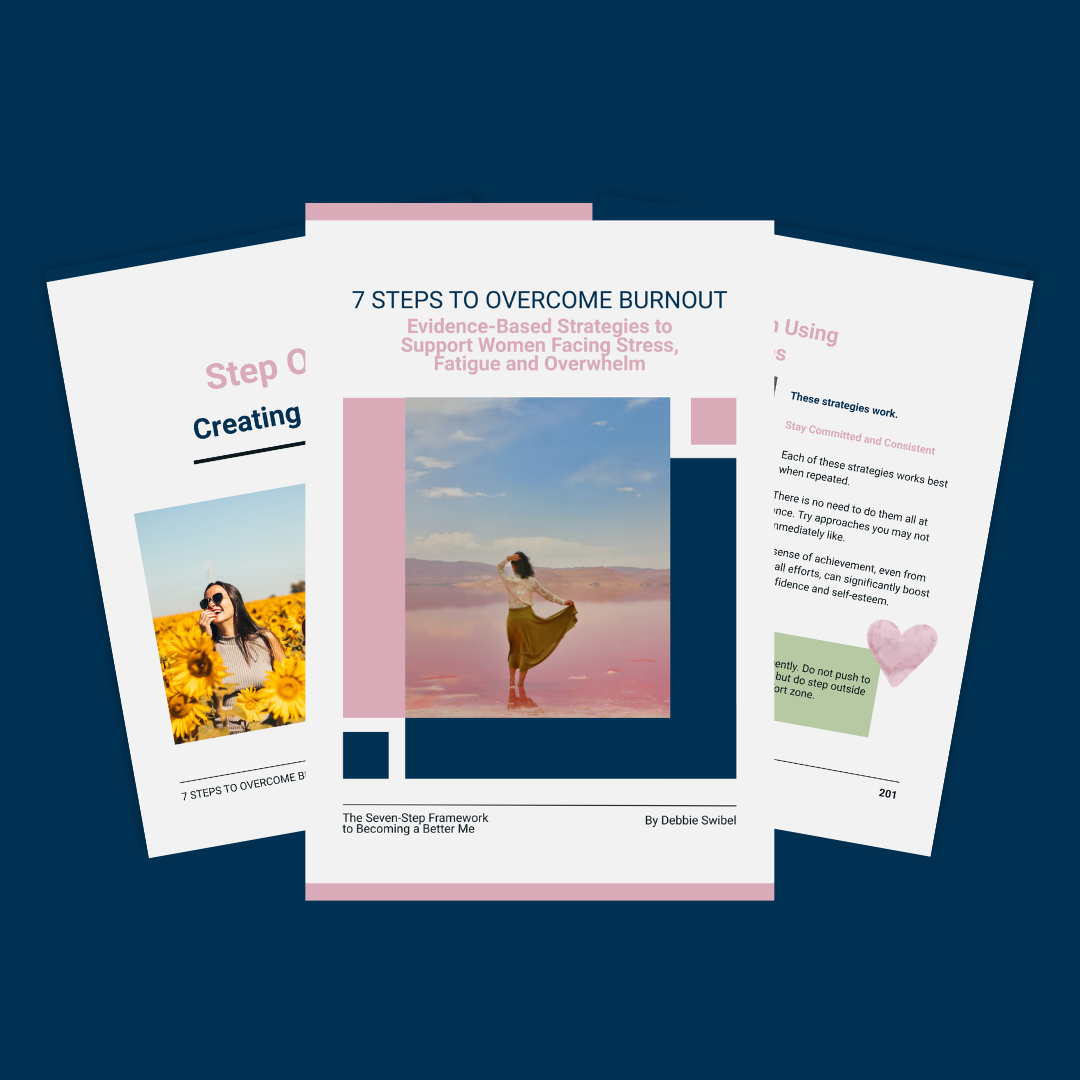
In 7 Steps to Overcome Burnout, I share practical strategies, insights, and evidence-based tools that have helped many women regain their energy, confidence, and sense of control.
This framework works because it is realistic, structured and designed for women who feel overwhelmed but still want to feel like themselves again.
If you are ready to take that next step, the book will guide you through it.
Because feeling exhausted, overwhelmed and stretched too thin should not be the cost women pay for being capable, competent and responsible.